
OPEN DAYS 15th & 16th OCTOBER & 6th NOVEMBER, FIND OUT MORE ON OUR OPEN DAY PAGE
Day to Day
We’ve collated the most common queries and included the details on this page. Please use the tabs below to find out more detail about the different topics. If there’s anything missing please let us know.
We can accept viewings at the following times, please allow 30 minutes for your visit with us. Visit us between 9:30 – 10:30, 1:30 – 2:30 or 3:30 – 4:00. We will also be holding open days later in the year.
We recommend coming for a visit to have a one-to-one tour. You and your child can see the whole school and ask any questions you have. At the end of your visit we can give you all of the information and forms you need to ensure your child’s space in our nursery.
Children can start with us from the term after their 2nd birthday.
We recommend visiting and having all paperwork completed within the term before your child has their birthday, at the absolute latest.
For example, if your child’s birthday is in February (spring term), complete paperwork by the end of the winter term (December). If you have any questions please get in touch
We run various sessions to cater to your family needs. If you don’t need childcare all week we can build a flexible schedule.
You may be eligible for help with childcare costs. There are different schemes depending on your child’s age, your working status and any benefits you may receive. Check the gov.uk website for more information.
Morning
8:45 – 11:45 (or 12:15 with lunch)
3 hours (3.5 hours)
Afternoon
11:45 (with lunch) or 12:15 – 3:15
(3.5 hours) 3 hours
All Day
8:45 – 3:15
6.5 hours
Fees
3 year old
£5.69 for unfunded hours
2 year old
£7.82 for unfunded hours
Morning
8:45 Doors open
9:00 Registration
9:10 Free flow play
10:00 Snack
10:15 Free flow
11:10 Group time
11:30 Lunchtime
Afternoon
12:15 Registration
12:25 Free flow play
1:30 Snack
1:45 Free flow
2:40 Group time
2:50 Story and Nursery rhyme
3:15 Home time
Our daily activities and continuous provision are thoughtfully designed around every child’s individual interests, providing a safe, rich, and stimulating environment where children learn and develop at their own unique pace.
Continuous Provision
Every day, children have access to high-quality continuous provision that encourages hands-on exploration and child-led discovery:
- Role Play & Small World: Fosters empathy, social skills, and imaginative storytelling as children explore familiar routines and miniature worlds.
- Creative Activities & Play Dough: Builds fine motor strength, hand-eye coordination, self-expression, and artistic skills through texture and design.
- Water & Construction Play: Introduces early concepts of physics, capacity, spatial awareness, problem-solving and teamwork.
- Outdoor Play: Encourages gross motor skills, physical confidence, risk negotiation and an appreciation for nature.
- Stories, Rhymes & Traditional Tales: Develops early language, vocabulary, listening skills and a lifelong love for reading.
- Maths Provision: Embeds foundational numeracy, counting, shape recognition and pattern-making through natural daily routines.
Enhanced Learning & Seasonal Themes
To build on this continuous foundation, everyday activities are dynamically enhanced around the children’s evolving interests, seasonal changes and cultural celebrations from around the world. These enhancements keep learning fresh and relevant while helping children make meaningful connections to the wider environment.
EYFS Alignment & Learning Through Play
By prioritising play-based learning, activities naturally stimulate curiosity and independence. This child-centred approach directly supports all key areas of the Early Years Foundation Stage (EYFS) framework, ensuring every child develops physically, socially, emotionally and cognitively in a nurturing environment.
Lunch time runs from 11.30-12.15 and all the children sit and eat together supporting social development and helping build a positive relationship with food.
Parents are asked to provide a packed lunch that is healthy, balanced and easy to eat. Please remember we are a nut free school so no products/food containing nuts/nut spreads/cereal bars with nuts in should be packed.
A healthy packed lunch for a 2 – 4 year old needs to be nutrient-dense, easy to eat independently and scaled to a toddler’s small stomach capacity. Pleas esee some different tips and ideas below:
Quick Portion Guide: Use Their Hand
A young child’s appetite fluctuates daily. Rather than weighing food, the Hand Rule provides an accurate age-appropriate scale.
Health Under 5s:
- Carbohydrates: A fist-sized amount (e.g., 1/2 slice of bread or 3–4 tbsp cooked pasta)
- Protein: The size of their palm (e.g., 1/2 hard-boiled egg, 1–2 tbsp tuna/hummus, or a small slice of ham)
- Fruit & Veg: What fits in their cupped hand (e.g., 4–6 carrot sticks, 4 halved grapes)
- Dairy/Alternatives: A matchbox-sized piece of cheese or a small pot of unsweetened yogurt (60–100g).
The 4-Part Lunchbox Structure
Aim to include one item from each category below to ensure a balanced, steady release of energy throughout the afternoon.
- Starchy Base: 1/2 to 1 pitta/wrap, pasta or rice salad
- Protein Builder: Cheese cubes, hummus or sliced chicken, turkey, or egg
- Fruit and Vegetables: Cucumber, pepper and berries or melon
- Dairy/Calcium: Plain or low-sugar yogurt, milk or water to drink
High-Risk Foods & How to Cut Them
For children aged 2 to 4, the primary choking hazard comes from foods that are round, firm, or smooth, as these can easily seal off a child’s small airway. The golden rule for these specific foods is to never cut them horizontally into round coin shapes, but instead always slice them length ways.
- Grapes and Cherry Tomatoes: Always slice them length ways into quarters. Cutting them straight across in half still leaves a round shape that can block an airway.
- Sausages, Hot Dogs and Meat sticks: Split the sausage length ways into long, thin strips first, then chop those strips into smaller bite-sized pieces. Never serve them as circular coins.
- Raw Carrots, Celery and Apples: Grate them, steam them until soft, or cut them into thin, flexible ribbons/batons rather than hard chunks or round slices.
- Large Soft Fruits (Plums, Strawberries): Cut into long wedges or quarters, removing any pits or tough stems.
Snack time
Children are offered snacks twice a day. This is a simple snack of a variety of dried foods and fruit. Here is an example of what we offer:
- Bread sticks, crispbread, oatcakes, rice cakes, Melba toast, crackers
- A selection of fruit/vegetables are offered also. Your child will be offered milk or water to drink.
Adaptations or alternatives are provided for those children that have allergies and intolerances. Please ensure you complete the allergy section on the Admissions form.
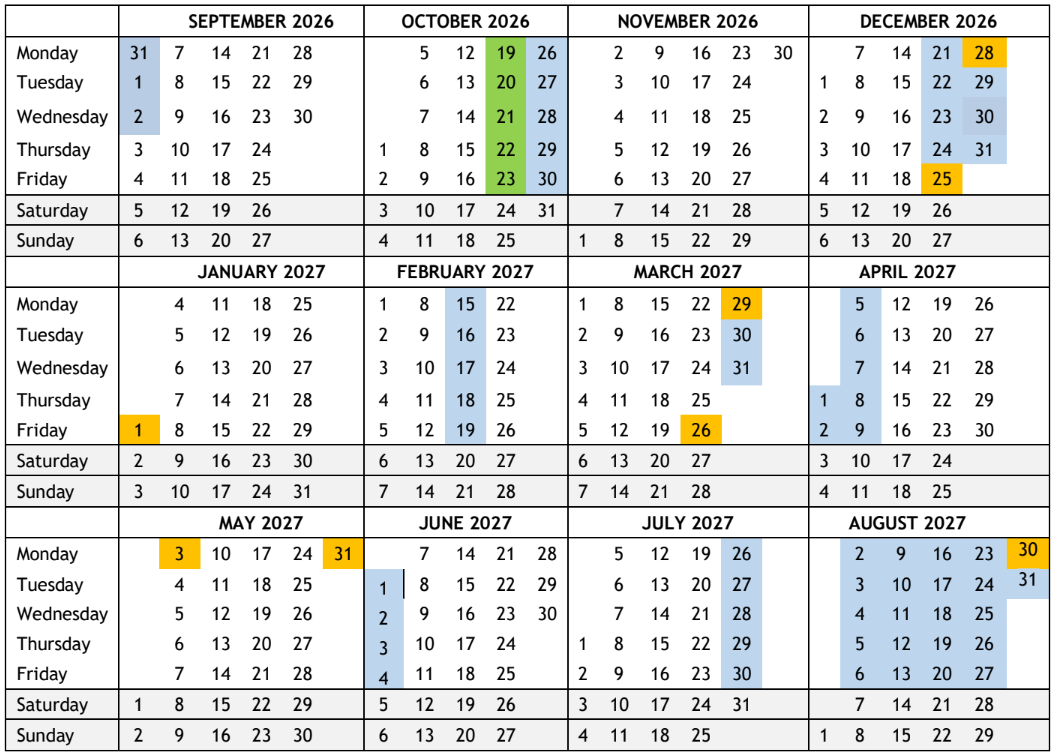
2026/27
Autumn
Thursday 3 September – Friday 19 October
Monday 2 November – Friday 18 December
Spring
Monday 4 January – Friday 12 February
Monday 22 February – Thursday 25 March
Summer
Monday 12 April – Friday 28 May
Monday 7 June – Friday 23 July
Inset days
Monday 19 October
Tuesday 20 October
Wednesday 21 October
Thursday 22 October
Friday 23 October
We use a purpose built app called Famly to keep in touch and share photos of your child’s activities.
We recommend transition days/session to build up time in the setting. For your child’s initial visit we welcome a parent/carer to stay with them. Sessions of one hour can run any time between 9:30 – 11:30 and 12:30 – 3:00 on a daily basis. Depending on your child’s needs their time in the setting can be built up over a week or multiple weeks.
At the end of their first session we can arrange additional sessions one by one or we can book a few in advance – depending on how well they get on and what you feel is best.
We are happy to advise in each case but we have no set procedure, we are always led by the children.
Please label all belongings with your child’s name. If your child requires medication for any reason you will need to complete a medication form. You can find our Supporting Pupils with Medical Conditions Policy here.
Seasonal clothing
Winter coat, wellies, warm hat
Sunhat, sun cream
2x spare set of clothes
At Burrows Nursery, our child-led learning in the natural environment means children will likely get muddy and dirty! Please bear this in mind and only send them in suitable clothing. We strongly recommend wellies all-year round.
For 2 year olds
If you child sleeps, please provide a blanket for them to sleep with and comforter (if needed).
Changing items
Nappies
Wet wipes
(Our Intimate Care Policy)
Refreshments
Drink
Packed lunch
Please drop off and pick up at the nursery door, we encourage the children to be independent in coming into the nursery. Collection time is 3:15, however we open our doors at 3:10 for those also needing to collect children from the main school at 3:15.
When completing the Admission form you can include details of anyone else that may be collecting your child. If a pick up by someone else isn’t prearranged you will need to call us in advance. If it is someone we haven’t met before we may enforce the password policy. Our priority is your child’s safety.
We will ask for details of dietary requirements and known allergies on our Admissions form. We have robust policies and procedures around allergies and our team attends regular training. There has been a recent update to legislation called Benedict’s Law. Training has been completed and additional equipment is now kept at school. Personalised allergy action plans and healthcare plans will be put in place.
Absence
Parents/carers must notify the school on the first day of an unplanned absence by 9am or as soon as practically possible. To report an absence please call 01208 72526 or contact Mrs Thompson on Class Dojo via a message. Please state your reason for this absence.
If your child has a holiday planned, please fill in a holiday request form stating the dates you wish your child to be absent.
Sickness
If your child is unwell, please keep them at home. This prevents any sickness bugs/illnesses spreading. If you feel your child requires Calpol before school, it is probably best to keep them at home.
For sickness and diarrhoea, please allow 48 hours after the last bout before your child returns to nursery.
If your child has an illness like chicken pox, slapped cheek, hand foot and mouth, conjunctivitis, etc please refer to the government guidance on The A-to-Z of infectious diseases in children and young people.